Every true crime blog eventually finds its way back to the case that changed everything: the 1996 murder of JonBenét Ramsey. It is impossible to tell modern crime stories without acknowledging the shadow it cast over forensic work, media scrutiny, and public trust. And now, nearly three decades later, a new scandal has emerged from the same investigative ecosystem—one that forces us to reconsider how fragile that trust has always been.
The sentencing of former Colorado Bureau of Investigation DNA analyst Yvonne “Missy” Woods is more than a headline; it’s a shockwave reverberating through a field already haunted by its most infamous failure. Woods, once trusted with evidence that could alter the fate of victims and suspects alike, pleaded guilty to cybercrime, perjury, attempt to influence a public servant, and forgery. She admitted to omitting facts, tampering with DNA results, and violating lab policies in more than 1,000 cases.
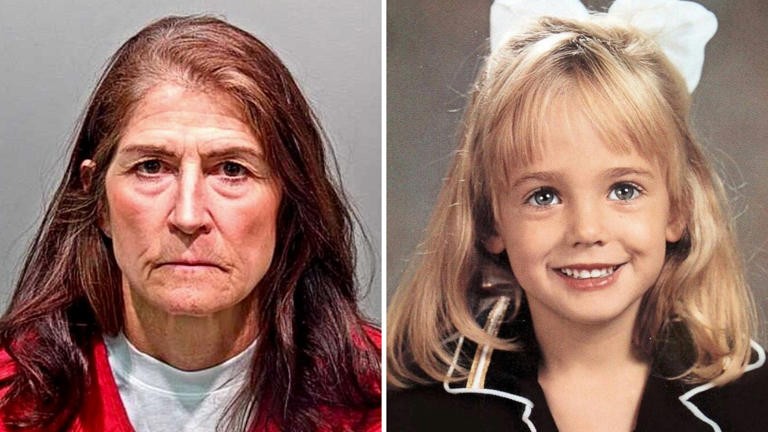
District Judge Andrew Poland summarized the gravity of the violations with chilling clarity: this was a breach of extraordinary trust. Woods herself admitted that no apology could restore what had been broken.
For true crime followers, the mention of Woods immediately evokes a more familiar name: JonBenét Ramsey. Woods worked at the CBI at the time of JonBenét’s murder—an investigation that hinged on trace DNA found on the little girl’s clothing and under her fingernails. That unidentified male DNA became the cornerstone of the intruder theory and ultimately the basis used to publicly clear the Ramsey family years later. It has also remained the most compelling key to solving the case.
John Ramsey has long criticized investigators for mishandling DNA evidence and is vocal about wanting it retested by an outside lab, believing fresh analysis may be the only path forward. With Woods now convicted of manipulating evidence in other cases, the déjà vu is impossible to ignore. It reignites long-standing concerns about what might have been overlooked, contaminated, or improperly interpreted during one of the most scrutinized investigations in American history.
To understand why Woods’s sentencing matters so profoundly, we must revisit the JonBenét case itself. On December 26, 1996, six‑year‑old JonBenét was reported missing from her family’s Boulder home. Hours later, her father found her body in the basement behind a latched door previously overlooked by police. She had a skull fracture, a garrote fashioned from a paintbrush handle tied around her neck, and signs of possible sexual assault. The autopsy concluded her death was caused by both strangulation and craniocerebral trauma.

From the beginning, the investigation was riddled with errors. The ransom note found on the stairs was unusually long and believed by many to be staged. The crime scene was contaminated by friends, clergy, and family supporters who moved freely throughout the house. Evidence was improperly secured. Early police theories focused intensely on the Ramseys, while others insisted the physical evidence pointed unmistakably toward an intruder.
Over time, DNA found on JonBenét’s underwear and clothing was used to support the intruder theory. In 2003, that DNA was matched to an unidentified male and the Ramseys were excluded. In 2008, District Attorney Mary Lacy publicly exonerated the family based on DNA findings—a decision some experts later said should never have been made.
The case remains open today. Boulder police continue to treat JonBenét’s murder as an active investigation, acknowledging both the limits of the early approach and the potential of modern forensic technology. Yet the mystery persists.
This is where Woods’s misconduct becomes important. When a DNA analyst admits to manipulating results across a thousand cases, it invites uncomfortable questions about every high‑profile investigation she touched. Did her practices compromise evidence? Were early DNA findings in the Ramsey case handled with the precision required? Could new testing rewrite the narrative entirely? These are not conspiracy theories; they are questions born from documented failures.
And no true crime narrative is complete without acknowledging that the JonBenét case wasn’t just a murder—it was a cultural rupture. It exposed cracks in forensic procedures, law enforcement coordination, media ethics, and public perception. It changed how we tell these stories, how we question authority, and how we understand the fragility of evidence.
The Woods sentencing is a reminder that the systems we rely on for truth are fallible, sometimes catastrophically so. It challenges us to reconsider unresolved cases, especially those resting heavily on forensic conclusions made decades ago. It reminds us that justice is not only about catching the right suspect; it’s about ensuring the pathway to truth is trustworthy.
The JonBenét Ramsey case remains unsolved. It remains a symbol. And now, with Woods’s admission of far‑reaching misconduct, it becomes a cautionary tale not just about a murder, but about the institutions meant to solve one.

