As a true crime writer, I spend countless hours immersed in current news—monitoring cases, tracking developments, and studying the unsettling patterns that emerge when everyday life is shattered by violence. Most stories, even the shocking ones, follow an understandable trajectory: a motive tied to relationships, money, history, or opportunity. But every so often, a case appears in the news that feels like a lightning strike—senseless, unpredictable, and devastating in a way that challenges our assumptions about public safety.
One recent story did exactly that.
A Routine Errand That Turned Fatal
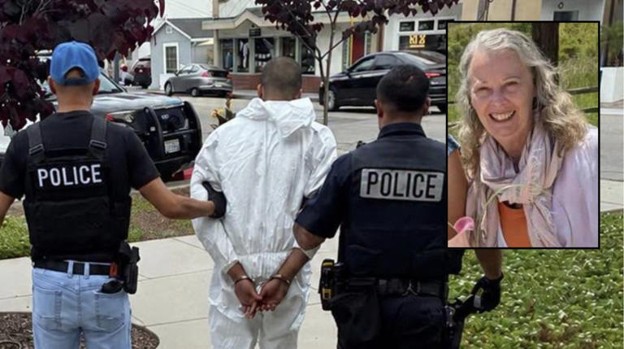
According to the information I found, 73‑year‑old Rachell Summers—a store manager at Art of Santa Cruz and a brand‑new grandmother—left the Capitola Mall on July 20 to cash her paycheck. It was a simple chore, something she had likely done countless times. But on this particular afternoon, a 19‑year‑old stranger, Tyler Leibelt, had made up his mind that he wanted to kill someone—anyone.
Police documents described the act as a “random act of violence,” and that phrasing still sends a chill through me. Summers wasn’t targeted for who she was, what she carried, or any interaction she had with Leibelt. She was simply the person who happened to walk into his field of view at the wrong moment.
The Calculated Path Toward a Spontaneous Killing
The details leading up to the attack are disturbingly deliberate. Court records indicate that Leibelt, an accounting student at Cabrillo College, sat in the cafeteria contemplating murder. He turned off his phone so he wouldn’t be interrupted, then took a bus to Big 5 Sporting Goods and purchased two switchblade knives—one for each hand. He walked through the Capitola Mall considering multiple potential victims: a man crossing the street, families, people in the food court, even someone sitting in a parked car.
He passed them all by, waiting for the right moment.
When he saw Summers, he followed her, kept his distance so she wouldn’t notice, and then ran to close the gap. Police said he stabbed her more than 11 times. A witness shouted for him to stop, but by then the damage was irreversible.
Summers died at the scene.
A Chilling Post‑Crime Calm
What stands out most is what happened immediately afterward. Leibelt didn’t flee town. He didn’t attempt to hide. He reportedly ran through the mall, discarded a knife, then walked to a nearby gas station—still covered in blood—and casually bought a drink.
He then called 911 to confess.
Even more unsettling are the statements in the documents noting that he had expressed desires to commit mass violence in the past, prompting a gun violence restraining order in 2025. After the murder, jail staff reported he still had homicidal thoughts.
Why This Case Caught My Eye
As someone who studies violent crime professionally, certain cases stay with me—not because they are the most gruesome, but because they expose cracks in the systems meant to protect the public.
This case is one of them.
There was no argument, no robbery, no personal history. Summers didn’t take an unnecessary risk or walk into a dangerous situation. She was a respected shop manager, a supporter of local artists, and a new grandmother dreaming of her grandchild’s future.
She did everything “right.”
And that reality makes the case incredibly difficult for communities to process. It challenges the comforting narrative that tragedies are predictable or preventable. It forces us to think about mental health intervention, community awareness programs, and what resources are available—or missing—for individuals who express violent ideation long before they act.
The Court Process Ahead
As for the details shared, Leibelt is charged with first‑degree murder with special circumstances and remains in custody without bail. His arraignment has already been delayed twice, and another court date is set for Aug. 19.
The legal proceedings will be lengthy, and the emotional fallout for Summers’ family, friends, co‑workers, and community will last far longer.
A Life Remembered
Summers wasn’t just a victim. She was a newly minted grandmother, a manager supporting local artists, and a woman whose loved ones described her dreams for her grandchild’s education and future.
She deserved safety. She deserved peace. She deserved many more years with her family.
Final Thoughts
Cases like this reinforce why I continue to monitor current news so closely. These stories—tragic, senseless, and heartbreaking—highlight not only the darkest corners of human behavior but the gaps in oversight, support systems, and early intervention that could prevent future acts of violence.
They also remind us that real people—not headlines—pay the highest price.
 amandasheppardauthor