Miami has never forgotten the November evening when Gladys Machado and her two young daughters vanished into silence. Their home in Flagami—once filled with the ordinary noise of family life—became the setting of a tragedy that unsettled the community for years. Now, more than a decade later, the man who admitted responsibility sits in a courtroom, waiting for twelve strangers to decide whether he lives or dies.
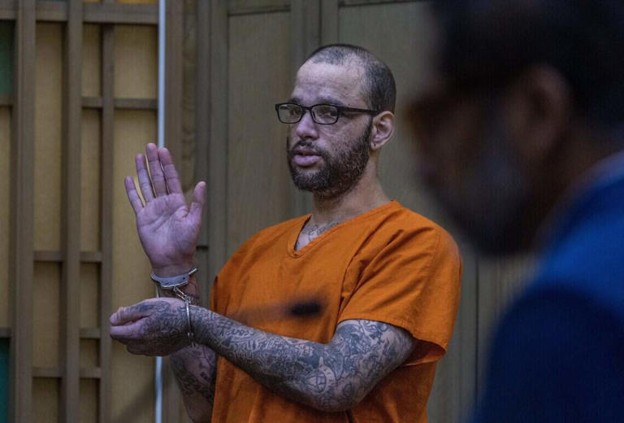
In the largest courtroom of the Richard E. Gerstein Justice Building, under the pale glow of fluorescent lights, Alberto Sierra appeared calm—too calm, some might say—flanked closely by his defense attorneys. The room filled with prospective jurors: teachers, retirees, office workers, people pulled from their daily routines into a grim chapter of Miami’s history.
They aren’t here to decide what happened. Sierra already confessed.
They are here to decide what should happen next.
A Relationship Unraveling
Machado and Sierra’s relationship had long frayed into volatility. Friends and family recall a history of domestic strife, the kind that leaves emotional cracks before anything physical ever occurs. Machado, seeking distance and safety, moved in with her grandmother in Homestead with her children. Sierra remained in Kendall, apart but never fully gone.
On the night of November 10, 2012, Machado took her daughters on a simple shopping trip—mundane, routine, the kind of evening mothers cherish. Her 6‑year‑old son stayed home with his great‑grandmother. Sierra joined Machado and the girls, trailing them through the Mall of the Americas, a decision that would later carry chilling significance.
By 11:30 p.m., Machado’s gold Nissan Altima disappeared from the block. It wouldn’t be seen again for nine days.
The Discovery
When the car finally resurfaced, it was parked near Sierra’s mother’s apartment complex, tucked into the bushes like someone had tried to make it invisible. Investigators found blood inside, evidence of violence that had unfolded before the victims were even brought home.
But the most devastating discovery came much earlier, just three days after the murders: a neighbor found Machado and her daughters hidden inside a bedroom closet in their Flagami home. The horror of their final moments was sealed within those walls.
The Confession
Questioned by detectives, Sierra did not attempt to weave a story. He admitted his actions plainly. What began as an argument escalated with startling speed and ferocity. He described attacking Machado in her car and then transporting her and the children back to the home. There, he ended their lives—one by one—using a plastic bag.
The forensic evidence matched his account: fingerprints, DNA, and a timeline riddled with incriminating detail.
A Pattern Ignored
Sierra’s past cast a long shadow even before the murders. He had been released from jail just five months earlier for violating probation in a weapons case. Child-protection investigators had also looked into him after a concerning incident involving Julia, though authorities did not file charges at the time.
These warnings now linger over the case like storm clouds, raising questions about intervention, systemic gaps, and signs that may have been dismissed too easily.
The Jury’s Task
As jury selection continues, each prospective juror is asked to confront the same moral weight: Is the death penalty an appropriate consequence for Sierra’s actions? Does the taking of a life—three, in this case—warrant the state’s gravest punishment?
The courtroom feels suspended in time as lawyers probe opinions, beliefs, and personal ethics. Early September is the target for seating the final 12, each one charged with evaluating the darkest parts of human behavior and the boundaries of justice.
The trial may not resurrect the innocence lost on that November night, nor will it heal the wounds left in its wake. But for the Machado family and a community still haunted by what happened, this final phase represents a closing door—a chance for the system to deliver a decision that reflects the weight of three stolen lives.
 amandasheppardauthor