WARNING: GRAPHIC CONTENT
Some cases linger long after you read them—stories so distressing and complex that they challenge your understanding of how neglect, vulnerability, and personal choice collide. The Maricopa County case involving Vivian Shimkus, his mom and his adult son is one of those situations, and the more details that emerge, the more unsettling the picture becomes.
According to statements shared with AZ Family, the victim’s aunt said that “everything was done that we could do.” On May 16, police and paramedics were called to the home out of concern for the son’s deteriorating condition. But despite their efforts—and the aunt’s urging—the son refused to be taken to the hospital.
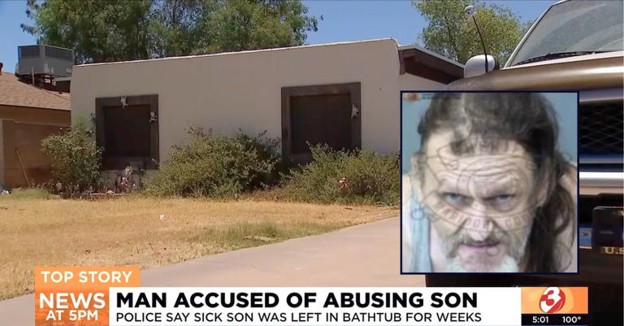
“Everyone tried to convince him to go,” the aunt explained. “When the paramedics came, he said no. They turned around and walked off, said we can’t touch him. He’s an adult.”
On paper, that moment might seem straightforward: an adult exercising his right to refuse medical care. But the physical state he was reportedly in raises difficult questions. By the time authorities were again called for a welfare check, the man was described as “skin and bones,” severely malnourished, and in a condition that could only be described as dire. Reports indicated that he had allegedly been left in a bathtub for seven weeks, a detail that feels almost unimaginable. Even more alarming, one of his legs had reportedly bent backwards, suggesting extreme physical decline or injury that should have triggered immediate intervention.
Despite everything, he had said “no” to help.
Shimkus has now been charged with vulnerable adult abuse and is being held on a $12,000 bond. After the latest welfare check, her son was finally hospitalized, though his condition remained unknown as of Thursday.
And here is where I find myself genuinely torn. On one hand, the family, police, and paramedics attempted to intervene. They recognized that something was terribly wrong. They followed procedure, urged him to seek help, and respected his autonomy when he refused—because legally, they had no choice.
On the other hand, the severity of his situation makes it nearly impossible to reconcile that refusal with the reality of his condition. How does an emaciated man, reportedly left immobilized in a bathtub for weeks, with a leg bent backwards, make an informed refusal of medical care? When does autonomy stop being a true choice and instead become a symptom of deeper vulnerability?
It leaves me unsure what to think. This case sits in a deeply uncomfortable gray area: where personal rights collide with the need to protect those who may not fully grasp the danger they’re in. It raises painful questions about how we safeguard vulnerable adults who refuse help, and whether the current laws give first responders enough flexibility to act in situations where refusal seems incompatible with the person’s physical state.
As more information surfaces, perhaps the broader context will become clearer. For now, though, this case remains a haunting reminder that sometimes every system in place can respond—and still, somehow, it isn’t enough.
 amandasheppardauthor